

| Trump’s Greenland stance fuels NATO tensions and tariff threats, unsettling markets ahead of the World Economic Forum | World Bank forecasts modest yet resilient global growth, while warning the 2020s may be the weakest decade since 1960s | UK economic data shows slight momentum, with housing sentiment improving as borrowing cost expectations shape 2026 outlook |
“Any decision about the future of Greenland belongs to the people of Greenland”
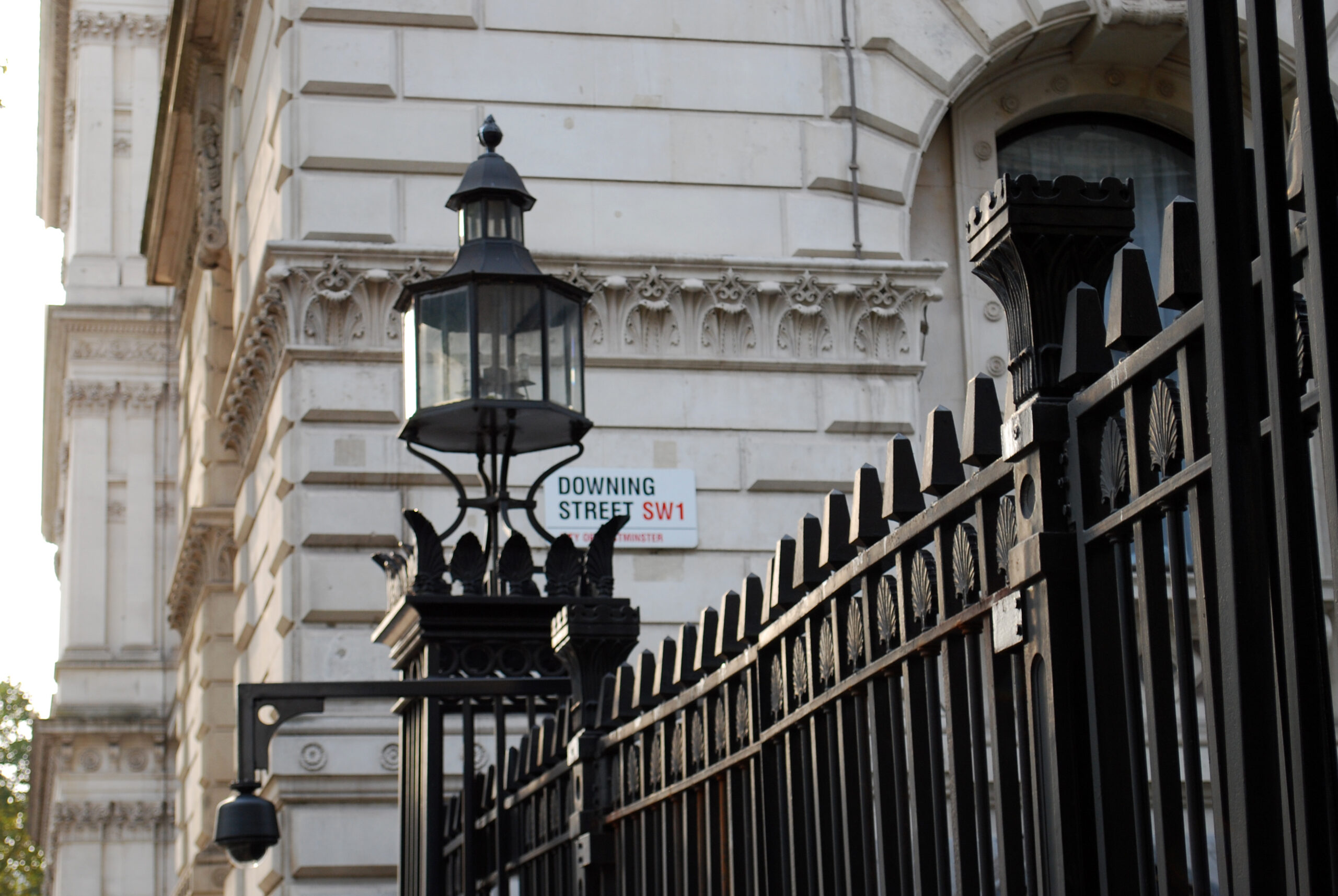
Keir Starmer spoke from Downing Street on Monday morning in response to President Trump’s intention to take control of Greenland because of its strategic Arctic position and mineral wealth. The Prime Minister said Trump was “completely wrong” to threaten tariffs against countries opposing the move, urging for the issue to be resolved through calm discussions between allies, not trade wars or military action.
Sir Keir said, “Any decision about the future status of Greenland belongs to the people of Greenland and the Kingdom of Denmark alone. That right is fundamental.” On tariffs, he added, “It is not the right way to resolve differences within an alliance, nor is it helpful to frame efforts to strengthen Greenland’s security as a justification for economic pressure.”
His comments came amid fears the UK and EU could be pushed into recession by potential US tariffs of 10% or 25%. EU leaders, led by French President Emmanuel Macron and German Chancellor Friedrich Merz, warned they would impose counter-tariffs if this happened. European Commission President Ursula von der Leyen said the EU’s response would be “unflinching, united and proportional,” while Greenland’s Prime Minister urged citizens to prepare for the possibility of an invasion.
Concerns that the dispute could fracture the NATO alliance are intensifying. Even US Republican representatives have warned the President about the risks of his approach. The situation comes as the World Economic Forum (WEF) gets underway in Davos, where global finance leaders are congregating to embrace this year’s theme ‘A Spirit of Dialogue’. Trump’s keynote speech on 21 January will be closely watched. Børge Brende, WEF Chief Executive, said the annual meeting of global business leaders will take place “against the most complex geopolitical backdrop since 1945.”
Meanwhile, markets have become unsettled. The gold price is hovering around record highs as investors flood to the ‘safe haven’ asset. As earnings season kicks off, investors are facing a potentially volatile period as uncertainty hits the markets and the possibility of a US-EU trade war intensifies. US equities have posted significant losses, as the ‘Sell America’ trade resurfaces and the dollar is struggling. The VIX index, widely known as the ‘Fear Index’, has reached its highest level since November, currently around 20.93. The higher the VIX, the greater the level of uncertainty in the market, with levels above 30 indicating tremendous uncertainty, levels above 20 regarded as ‘high’ and below 12 as ‘low’ volatility.
A Japan-led global bond sell-off has also commenced, as concerns over the country’s finances takes hold.
Predictions for the global economy
The World Bank’s most recent Global Economics Prospects report suggests that the global economy shows signs of resilience, despite ongoing trade tensions and geopolitical uncertainty.
According to the research, global growth is expected to be relatively steady over the coming two years. The World Bank now anticipates growth of 2.6% in 2026 and 2.7% in 2027 – an improvement from June 2025’s forecasts. In developing economies, growth is expected to slow to 4% in 2026, then rise to 4.1% in 2027 as financial conditions strengthen.
Despite some areas of resilience, the 2020s are likely to be the weakest decade for global growth since the 1960s. Indermit Gill at the World Bank commented, “Over the coming years, the world economy is set to grow slower than it did in the troubled 1990s – while carrying record levels of public and private debt. To avert stagnation and joblessness, governments in emerging and advanced economies must aggressively liberalise private investment and trade, rein in public consumption, and invest in new technologies and education.”
Ahead of President Trump’s tariffs threat, in its latest world economic outlook, the International Monetary Fund (IMF) warned that trade tensions and a reversal in the artificial intelligence (AI) boom are among the main risks to global economic growth, describing the global economy as ‘steady’, with growth expected to remain ‘resilient’ this year.
Uptick in UK growth
Latest data from the Office for National Statistics (ONS) indicates UK GDP grew by 0.1% in the three months to November, marking a slight improvement on the three months to October, which saw no growth. On a monthly basis, the economy is estimated to have expanded by 0.3% in November. This was stronger than economists had expected, with forecasts predicting monthly growth of 0.1%.
Here to help
Financial advice is key, so please do not hesitate to get in contact with any questions or concerns you may have.
The value of investments can go down as well as up and you may not get back the full amount you invested. The past is not a guide to future performance and past performance may not necessarily be repeated.
All details are correct at time of writing (21 January 2026)